A full local search presence for a Romford steakhouse: a page for every neighbourhood, every service, and the technical foundation to rank for all of it.
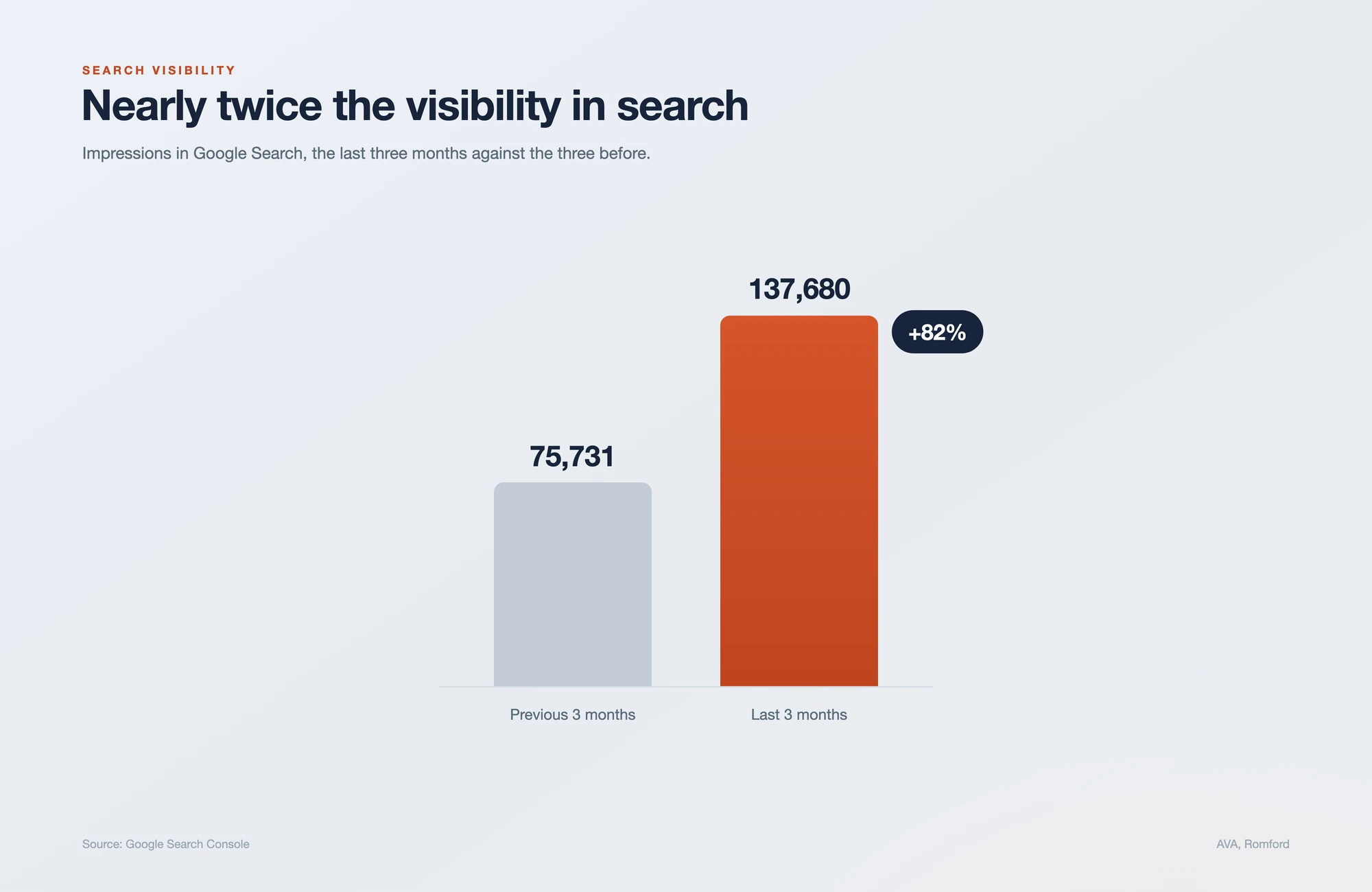
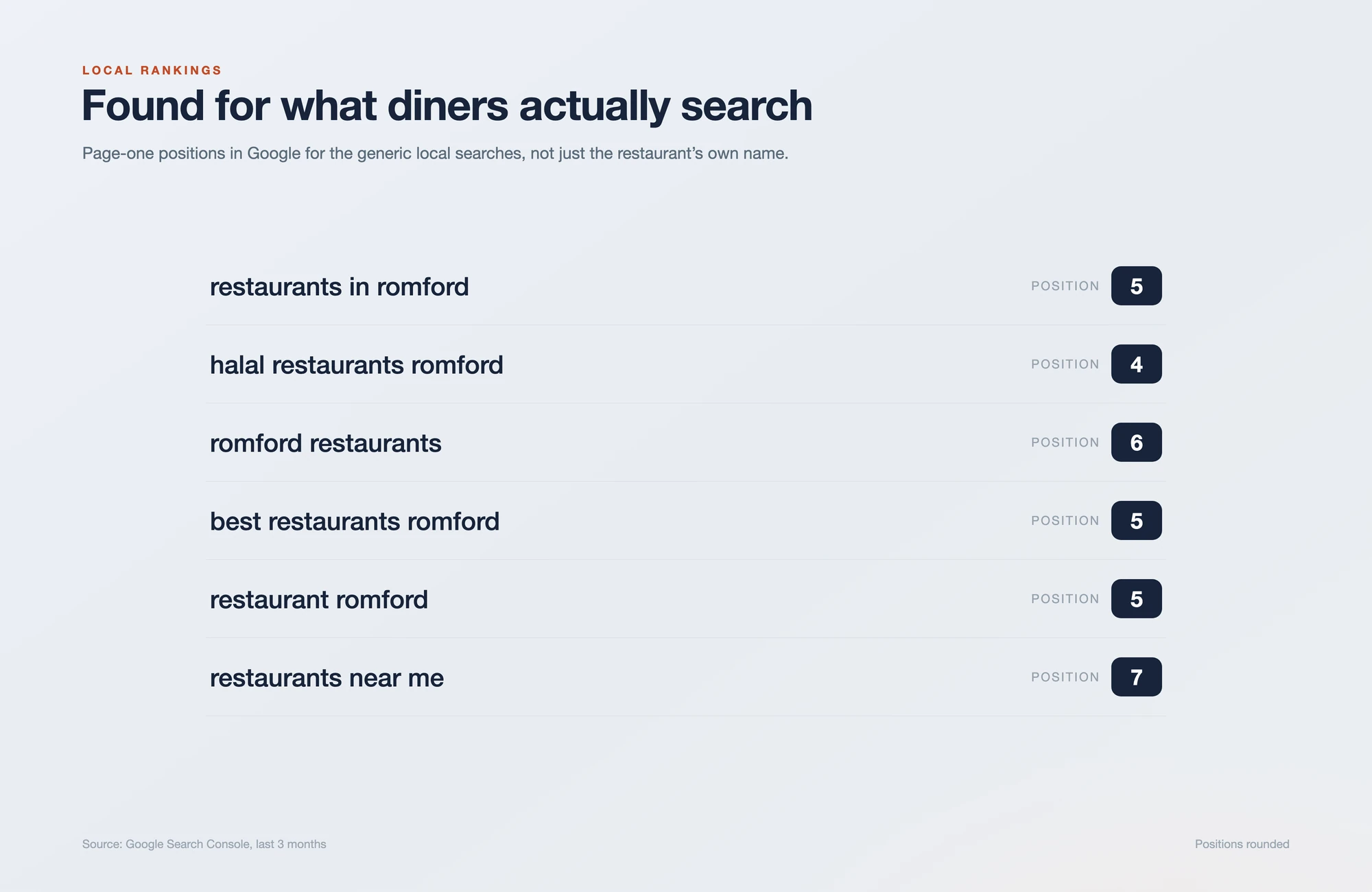
Asquare AI built AVA Steakhouse & Grill a complete local search presence across the Romford borough: seven neighbourhood pages, thirteen service and local-intent landing pages, five in-depth steak guides, and the structured data and indexing work underneath them. The restaurant went from ranking for little beyond its own name to covering the searches that actually fill tables.
By Anirudh Katti, Founder · Published 6 October 2026
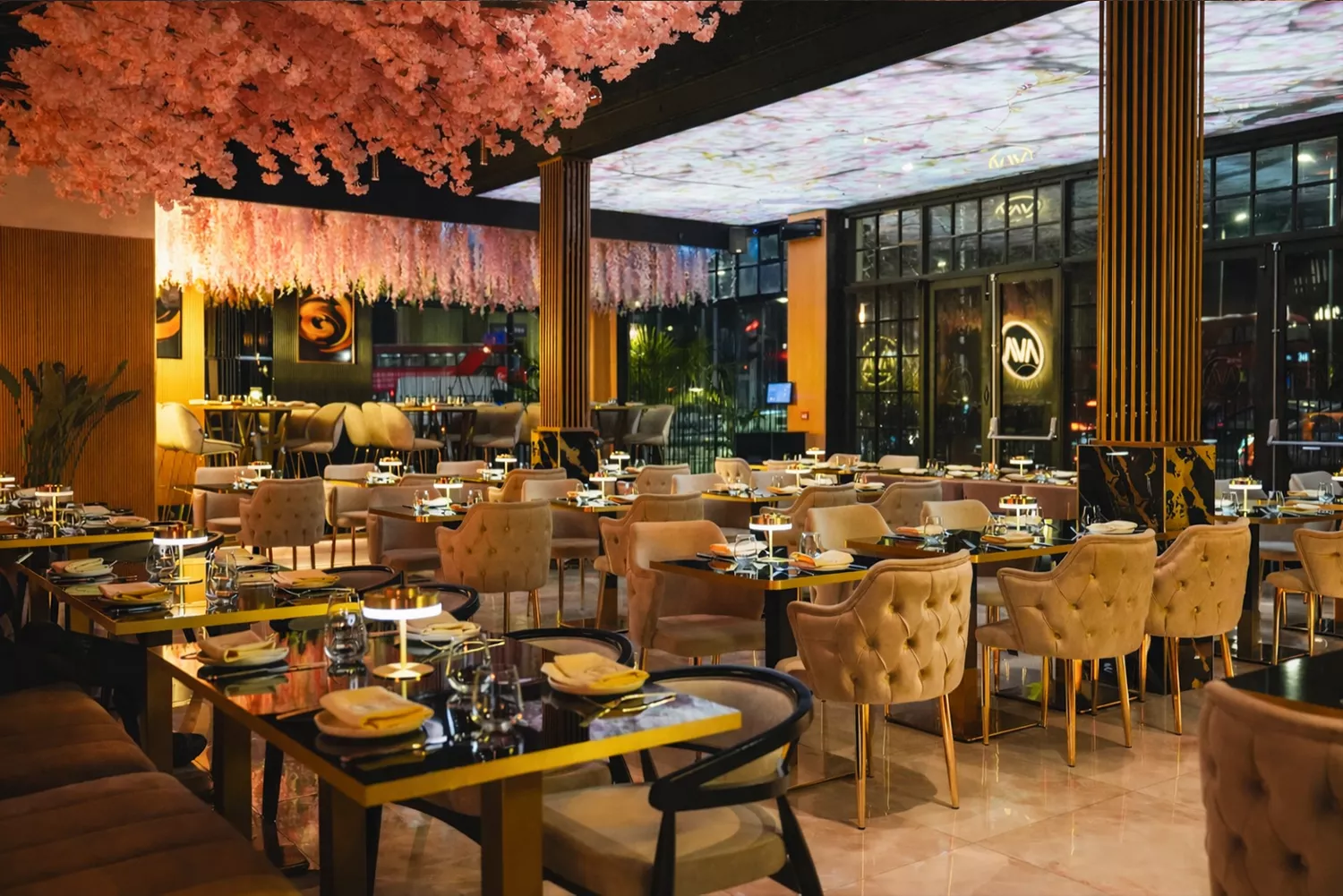
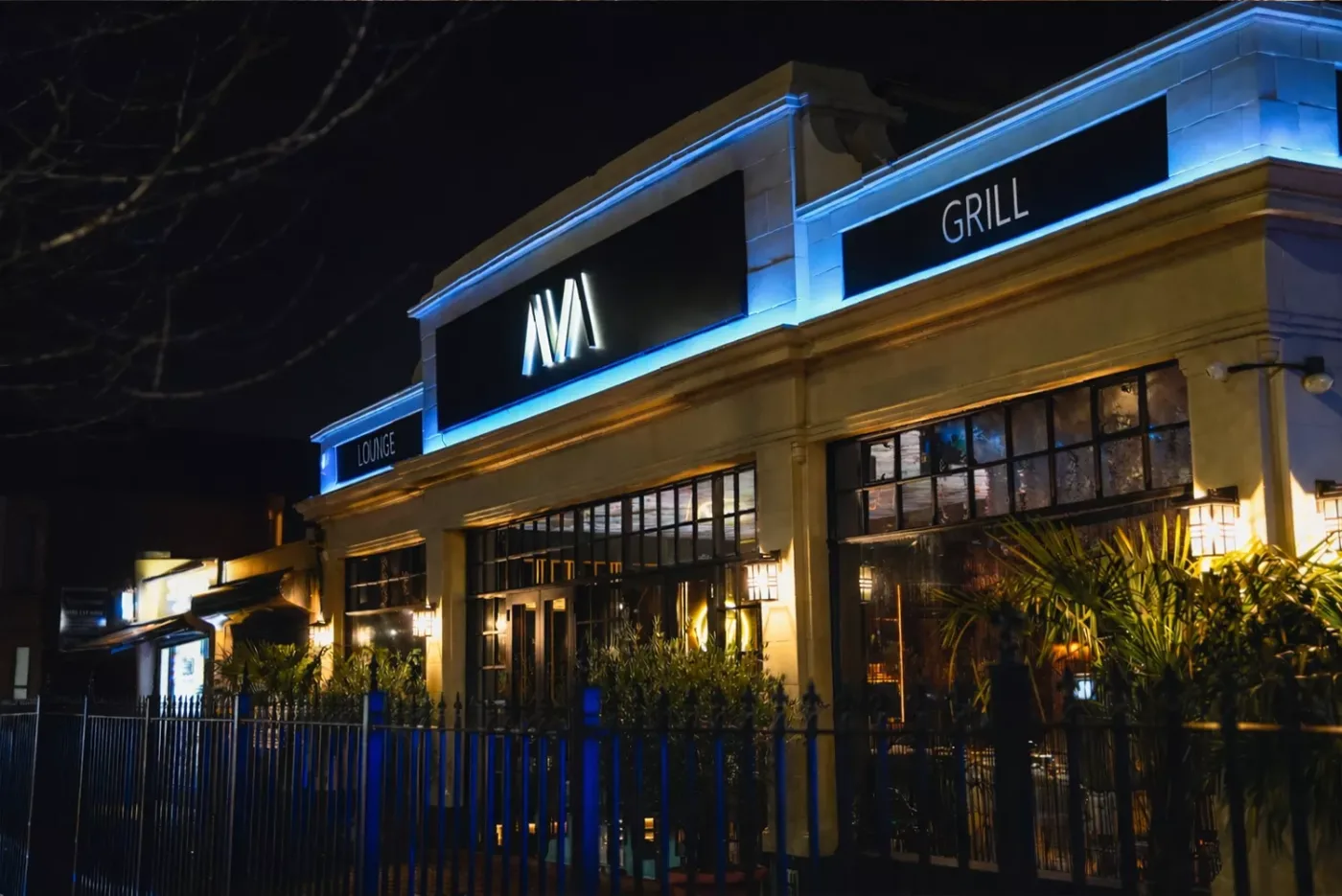
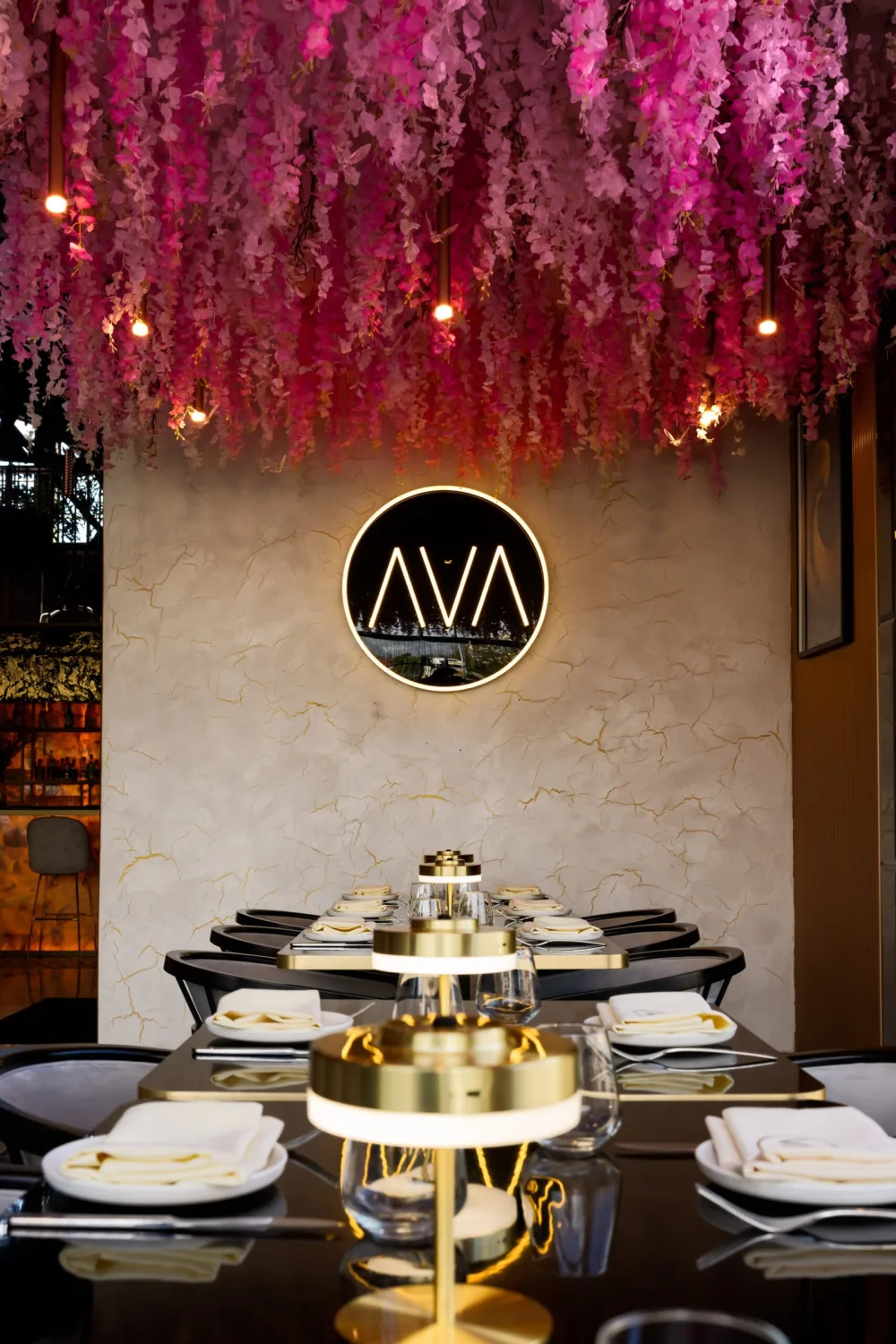
AVA is a premium steakhouse in the heart of Romford: an open-flame grill, a full bar, and a dining room under a ceiling of blossom. The room was doing the work. The website wasn't.
Outside of its own name, AVA barely showed up for the searches that actually fill tables: the "steakhouse near me", the neighbourhood searches, the Sunday lunch and private-party hunts. Someone two miles away in Hornchurch, typing exactly what AVA sells, was finding a chain instead.
People don't search "restaurant". They search "steakhouse in Hornchurch", or "Sunday roast near me", or "private dining Romford". Each of those is a different person with a different need, and each deserves a page built for it rather than a homepage that half answers all of them.
The mistake most restaurants make is treating local SEO as a single fight for "restaurant in [town]". It isn't. It's a hundred smaller searches: the neighbourhood, the occasion, the cut, the dietary need, the station someone is arriving at. Win a few dozen of those and you have a steady stream of people who were already looking for exactly what you serve.
That only works if each page is real. Seven genuinely written neighbourhood pages beat seventy generated ones, every time, because the generated ones get read as thin duplicate content and drag the rest of the site down with them.
Hospitality search has split in two. One half happens in the map pack, decided by proximity, reviews and how complete and consistent a business listing is. The other half increasingly happens inside an AI answer, where an assistant is asked where to eat and returns a handful of names with no map at all.
A restaurant that only maintains its map listing is competing for half the demand. The other half goes to whoever gave the answer engines something worth quoting: structured data that states plainly what the business is and where, FAQ pages that answer the real questions, and guides substantial enough to be cited rather than skimmed.
Related reading: the AVA Grill website build · Related service: local SEO in Essex
They work when each page is genuinely written for the place it names, with real local detail, directions and its own reason to exist. They fail when they are the same page with the town name swapped, which search engines treat as thin duplicate content. The work is in writing seven real pages, not generating seventy fake ones.
Only as many as it can honestly serve. For a single-site restaurant that means the neighbourhoods people actually travel from, usually between five and ten. Beyond that you are claiming a catchment you do not have, and the pages compete with each other rather than adding reach.
Answer Engine Optimisation is making a site worth quoting when someone asks an AI assistant a question rather than typing a search. For a restaurant it means proper structured data, clear FAQ pages, and genuinely useful guides an assistant can cite. It increasingly decides whether you appear at all in an AI answer.
Local pages typically start ranking within two to three months, and the compounding effect builds over six to twelve. Keyword coverage moves first, rankings follow, and traffic follows those. Anyone promising first-page results in weeks is either targeting terms nobody searches or is not being straight with you.
If people within three miles of you are searching for exactly what you serve and finding a chain instead, that is a local search problem, not a food problem.
Book a free strategy call →Run a restaurant with the same problem? Here is how we approach hospitality.