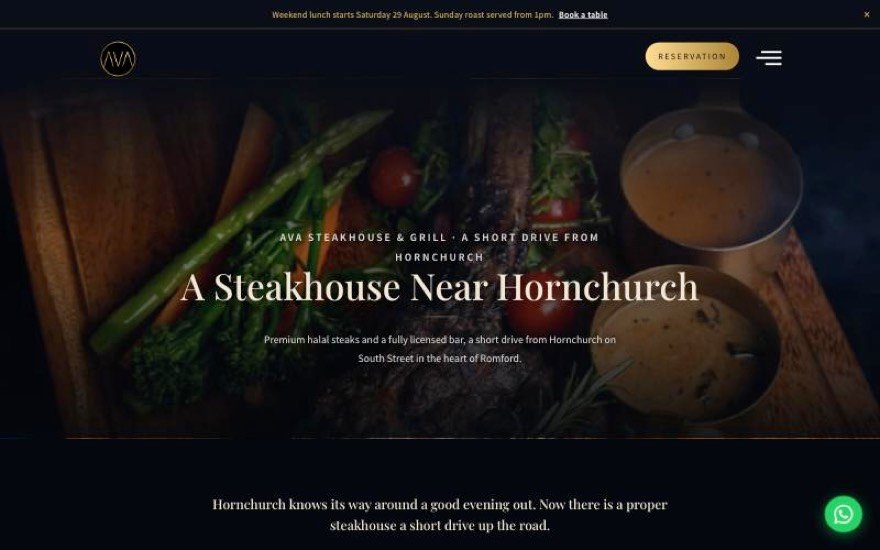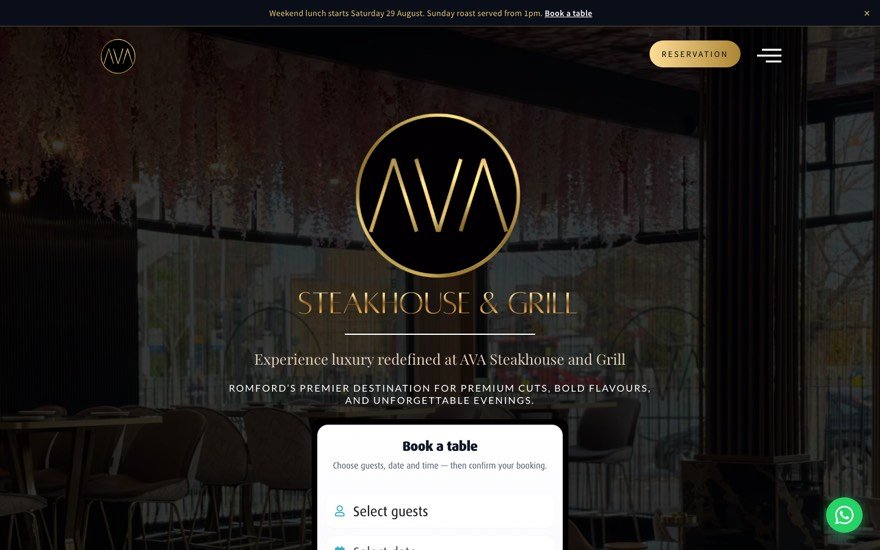
A dark, sophisticated restaurant website for a premium Romford steakhouse: designed to match the dining room and drive reservation bookings.
Asquare AI designed a luxury restaurant website for AVA Grill, a fine dining steakhouse in Romford. The dark-gold design matches the room, and the site handles the three things a restaurant website must do: take reservations, show current menus, and sell private events, all optimised for the mobile searches that drive bookings.
By Anirudh Katti, Founder · Published June 2026 · Updated 7 July 2026
Walk into AVA Grill and you know immediately what kind of place it is. Dark, moody lighting. Premium cuts: Argentinian ribeyes, Australian grain-fed, Wagyu at the top end. The kind of place you book for a birthday, an anniversary, a client dinner you actually care about. It's a destination, not a Tuesday night out.
Their website wasn't saying any of that. Generic layout, standard photography, a menu that was hard to find. For a venue competing for occasion-driven customers in the Romford dining market: customers who Google before they book: that disconnect was costing them real bookings every week.
Great restaurant websites do one thing above everything else: they make you feel like you're already there. The anticipation, the atmosphere, the sense that this is worth dressing up for. That was the brief.
The search for a special occasion restaurant happens on a phone, at 9pm, when someone types "fine dining Romford" and clicks the result that looks like it matches what they're imagining. AVA Grill's website now wins that moment: and it delivers on the promise the search result makes.
If you run a restaurant or venue and your website doesn't make people want to be there, it's not a website. It's a missed booking.
Most UK diners check a restaurant's website and menu before booking, and the majority of those visits happen on a phone. For a fine dining venue the website is part of the experience: if the site feels cheap, the £40 steak feels overpriced before the guest arrives. Design quality directly moves booking numbers in this industry.
The commercial machinery matters as much as the aesthetics. Reservations need to work without a phone call, menus must be current and readable on mobile rather than buried in a PDF, and private dining and events need their own pages because they carry the highest margins in the building. Restaurant website design is about removing every step between craving and confirmed booking.
Online reservations, current menus as readable pages rather than PDF downloads, location and opening hours visible without scrolling, a private events section, and photography that sells the room and the food. Speed on mobile matters more than any visual flourish.
A professionally designed restaurant website typically costs £1,500 to £5,000 depending on booking system integration, menu management and photography needs. It usually pays for itself in a handful of additional covers a week.
Both feed different moments. Social media builds desire; search captures it. When someone searches for a steakhouse near them or fine dining in their town, only SEO puts you in that result. The strongest restaurants run the website, local SEO and social together.
A restaurant website has one job: make someone book a table. We build hospitality sites that sell the experience from the first pixel: atmosphere, menus, booking, and the social proof that closes the decision.
Book a free strategy call →Run a restaurant with the same problem? Here is how we approach hospitality.