Local SEO along the East London and Essex corridor comes down to one decision most businesses get wrong at the start: whether to compete as a London business or an Essex one. Get that right and the rest, Google Business Profile, location pages, reviews, falls into a sensible order. Get it wrong and you spend a year chasing a term you were never going to win.
This is the patch we work in. Every client site we have built sits on this corridor: a steakhouse in Romford, an MOT centre serving Ilford and Stratford, a property company in Romford, an alloy wheel service covering London and Essex. The pattern repeats so reliably that it is worth writing down.
London or Essex? The question everyone asks first
Target the town first, the county second, and treat London as a bonus rather than the goal.
The confusion is real and it is geographic, not imagined. Romford sits inside the London Borough of Havering, so it is administratively London. It also carries an RM postcode, which reads as Essex to almost everybody who lives there. Ilford is in Redbridge, London, with an IG postcode. Barking and Dagenham is a London borough that most people outside the M25 would place in Essex without hesitating.
So customers search both ways, and they are both right. The useful question is not "which am I" but "which search am I going to win".
A single-site business is not going to outrank a national agency for a bare London term. There is no proximity advantage in it, the competition has a decade of links, and the people searching that way are mostly not going to travel to you anyway. The searches that produce actual customers carry the town name: the place they live, or the place they are driving to.
So the order is: own your town, then the towns either side of it, then the county. If London terms come, they come as a by-product of the authority the rest built. Our local SEO work in Essex and our East London work are the same engine pointed at different halves of the same corridor.
Your catchment is a line, not a circle
People travel along roads and rail lines, not across open ground, so a corridor catchment is long and thin rather than round.
Draw a ten-mile circle around a business in Romford and you will include places nobody from there ever drives to. Follow the A12 instead and you get Gidea Park, Harold Wood, Brentwood, Shenfield, on toward Chelmsford. Follow the A13 and you get Dagenham, Rainham, Barking. Follow the Elizabeth line and the catchment stretches west into Stratford and east to Shenfield in a way the road does not.
That shape should decide which towns you write pages for. A garage in Ilford genuinely competes for Seven Kings, Goodmayes, Barkingside and Gants Hill, because those are minutes away on the same roads. It does not meaningfully compete for somewhere the same distance south across the river.
The cheapest way to find your real catchment is to look at where your existing customers already come from. Postcodes on invoices beat any tool. If a third of your work comes from one town you have never mentioned on your website, that is the first page to write.
What actually decides local rankings
Google describes local ranking with three words: proximity, relevance and prominence. They are not equally useful to you.
| Factor | What it means | How much you control it |
|---|---|---|
| Proximity | How close the searcher is standing to you when they search | None, short of moving premises |
| Relevance | How well your profile and website match what they typed | Complete control, and it is usually where the problem is |
| Prominence | How well known you are: reviews, citations, links, mentions | Strong influence, but it takes months |
Most businesses assume they are losing on prominence and start chasing links. In our experience they are losing on relevance, which is far cheaper to fix. The profile is in the wrong primary category. The website never puts the service and the town in the same sentence. The homepage says "quality service, competitive prices" and never says what the business does or where.
Google Business Profile: the quick wins, first
This is the part that moves fastest, often within days, because Google re-crawls the profile far more often than it recrawls your site. Do these before you touch anything else.
- Primary category. One field, enormous weight. "Car repair and maintenance service" and "Auto body shop" are different businesses to Google. Pick the one that matches the job you most want to be called about, and use the secondary categories for the rest.
- Service area, honestly set. List the towns you genuinely cover. Listing thirty makes you look like a national chain and dilutes every one of them.
- Services and products, filled in properly. Most profiles leave these blank. They are free relevance for the exact phrases people search.
- Opening hours including bank holidays. Google demotes profiles it thinks are stale, and a wrong Christmas opening is also a lost customer.
- Real photos, added regularly. The shopfront, the team, the work. Not stock.
- Name, address and phone that match the website exactly. Down to whether it says "Road" or "Rd". Inconsistent details across directories are one of the commonest quiet drags on local ranking.
If you do nothing else from this guide, fix the primary category and fill in the services. It costs an afternoon.
Location pages: when they work and when they are junk
A location page works when it is genuinely written for the place it names. It fails when it is one page with the town name swapped, which search engines treat as thin duplicate content.
This is where most local SEO goes wrong, and it goes wrong in a predictable way. Somebody reads that location pages help, generates forty of them from a template, and ends up with forty near-identical pages competing with each other and none of them ranking.
A page earns its place if it contains something that could not be copied onto another town's page. How to reach you from there. Where to park. The landmark everyone uses for directions. What customers from that area typically come in for, which is genuinely different: a Hornchurch customer and a Barking customer are often buying different things.
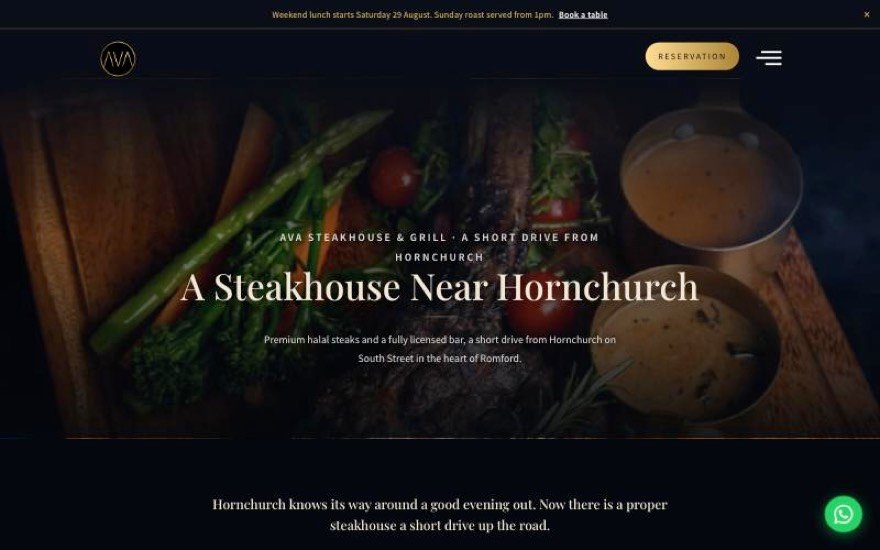
For a single-site business the realistic number is five to ten. Beyond that you are claiming a catchment you do not have, and the pages begin to cannibalise each other. We built seven for a Romford restaurant because seven was the honest number of neighbourhoods it genuinely draws from.
Reviews, and the law you need to know about
Reviews feed prominence, and they are the single most visible thing a customer sees before they choose. Ask for them properly: in person at the point the job goes well, followed by a link that goes straight to the review form rather than to your profile's front page.
One thing worth being plain about. Since the Digital Markets, Competition and Consumers Act came into force, fake reviews and undisclosed incentivised reviews are illegal in the UK, and the penalties reach individuals, not just companies. Buying reviews was always a bad idea. It is now a legal risk as well as a ranking one. Ask real customers, make it easy, and reply to every review including the bad ones.
The website foundation underneath it all
The profile gets you into the map pack. The website is what decides whether the click turns into a phone call, and it also feeds the relevance signal the profile depends on.
- Say the service and the town in the title of the page. Not "Home" or "Welcome".
- Put the full address and phone number in the footer of every page, as text, matching the profile exactly.
- Add LocalBusiness structured data with the same name, address, phone, opening hours and service area.
- Make it fast on a phone. Most local searches are on a mobile, often standing outside.
- Make the phone number tappable and put it where a thumb lands, not buried in a contact page.
None of this is exotic. It is the plumbing, and it is missing more often than not. If you are weighing up whether to rebuild, our guide on what a website actually costs covers what that work involves.
Local search is splitting in two
There is a second half to this now. Alongside the map pack, people ask assistants for recommendations in plain language: the best steakhouse near Romford, a garage in Ilford that does MOTs on a Saturday. Those answers are assembled from content that is clear, factual and structured enough to be quoted.
In practice that means the same work pays twice. Proper structured data, genuine answers to real questions, and pages that state facts plainly rather than selling, all feed both the map pack and the assistant. We cover the mechanics of that in our guide to generative engine optimisation.
What to do in the first 30 days
In order, cheapest and fastest first.
- Week one. Fix the Google Business Profile primary category. Fill in services. Correct the hours. Make the name, address and phone identical to the website.
- Week two. Pull the postcodes off your last hundred invoices and find out where your customers actually come from. That list is your location-page plan.
- Week three. Rewrite the homepage title and the main service page so they name the service and the town. Add LocalBusiness structured data.
- Week four. Start asking every customer for a review, with a direct link. (Work out how many you need before you start, because the number is usually smaller than people fear.) Write the first location page properly, for the town that came up most in week two.
That is a month of work with no budget beyond your own time, and it covers the relevance problems that hold most corridor businesses back. The slower work, more location pages, content, links, follows from there.
Want to know where you actually stand?
We will look at your Google Business Profile, your current local rankings and the towns you should realistically be targeting, and tell you straight what is worth doing first. No charge and no obligation.
Book a free local review