A portfolio site for an executive chef whose work had only ever appeared under other people's restaurant names.
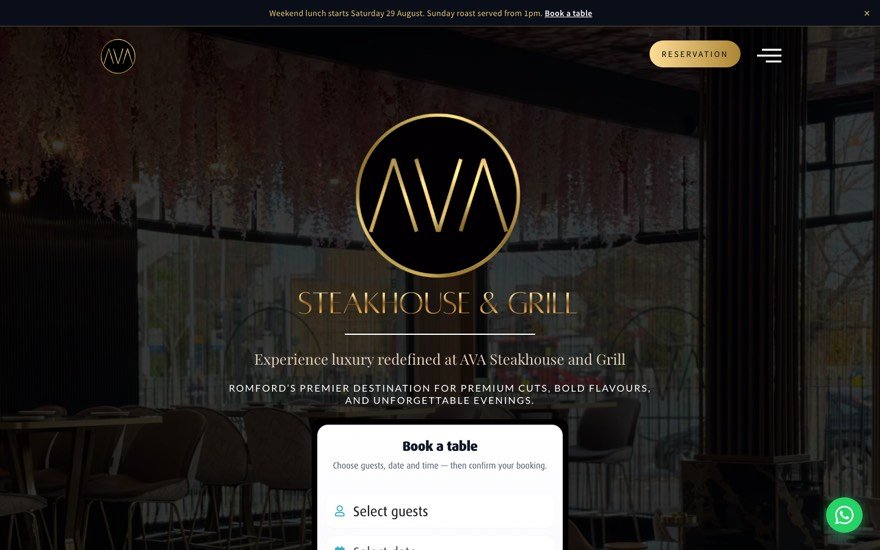
Asquare AI built the personal site for Syed Rasel Ahmed, executive chef at AVA Steakhouse & Grill. Twenty-three years across Park Lane hotels, Mayfair grills and Gordon Ramsay's kitchens had left a career with no single address: a name attached to other people's restaurants and a social feed that forgets everything older than a fortnight. The site puts the career, the dishes and the press in one place, on a domain he owns.
The chef's CV is unusually legible: The Dorchester on Park Lane, senior sous chef at The Biltmore Mayfair, InterContinental and Hilton Park Lane, Gordon Ramsay's kitchens, and Mayfair Chef in 2007. Since 2025 it has been his own pass at AVA.
None of that was findable under his own name. Search a chef and you get the restaurant that currently employs them, a handful of tagged photographs, and nothing that survives the next move. For someone whose next step depends on being taken seriously by people who have never eaten his food, that is a real gap, and it is not one an employer's website can close, because an employer's website belongs to the employer.
This is closer to an architect's or a photographer's site than to a restaurant's. The work has to be seen rather than described, and the career has to be readable in order by somebody who is scanning it quickly.
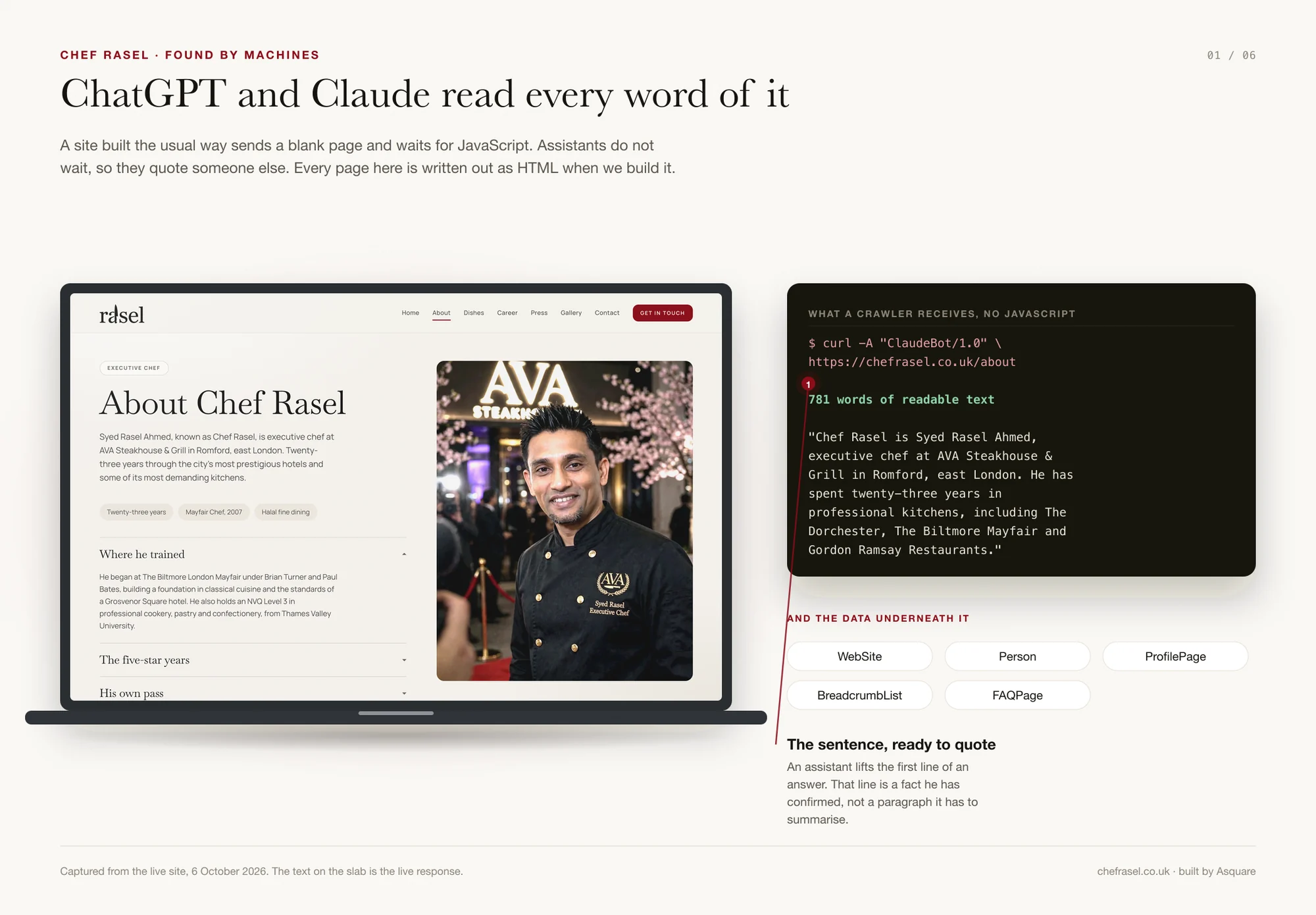
A chef gets looked up by people who will never meet him, increasingly through an assistant rather than a search box. A site that ships a blank page and waits for JavaScript gives those tools nothing to quote, so every page here is written out as HTML when it is built.
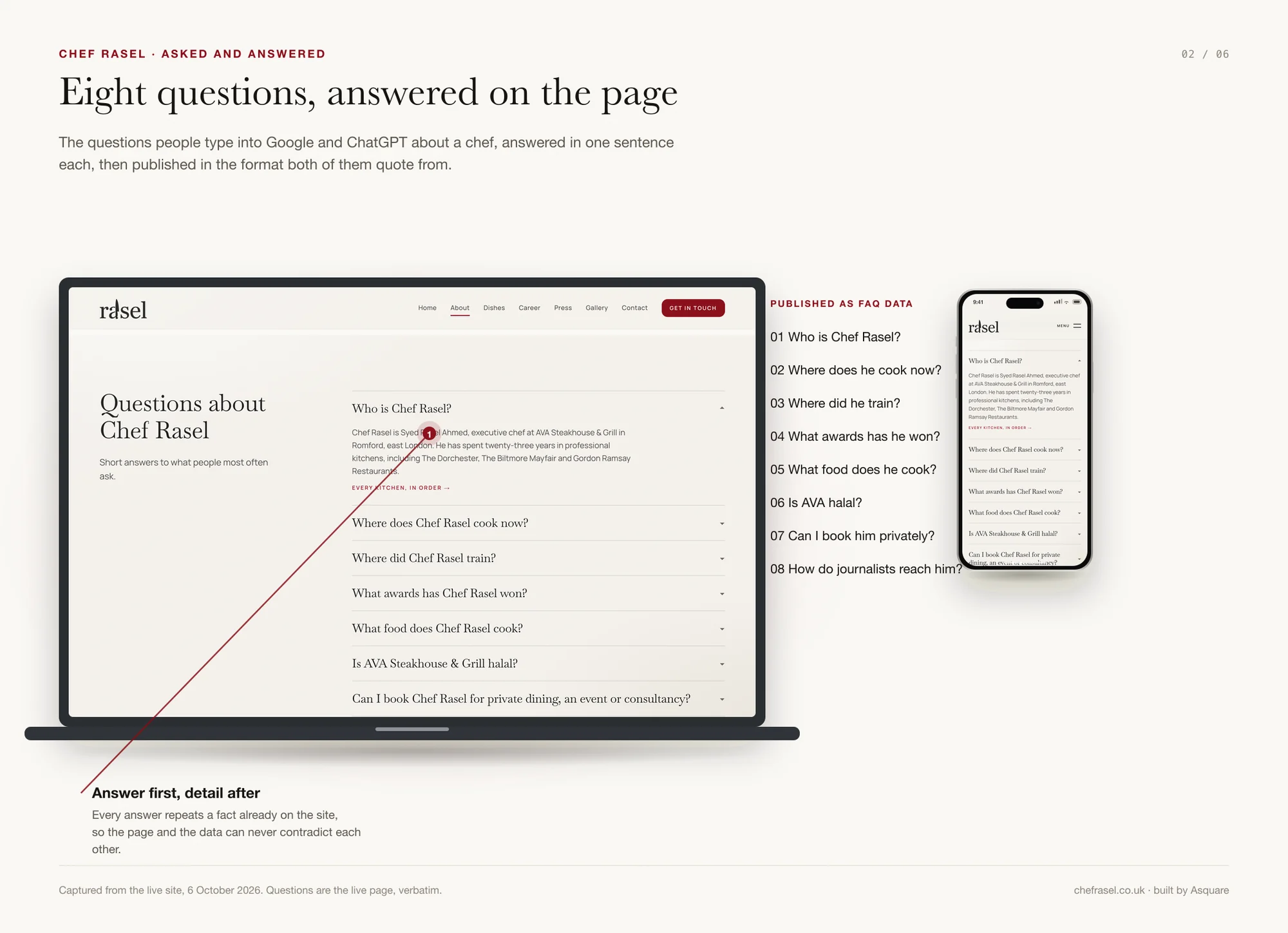
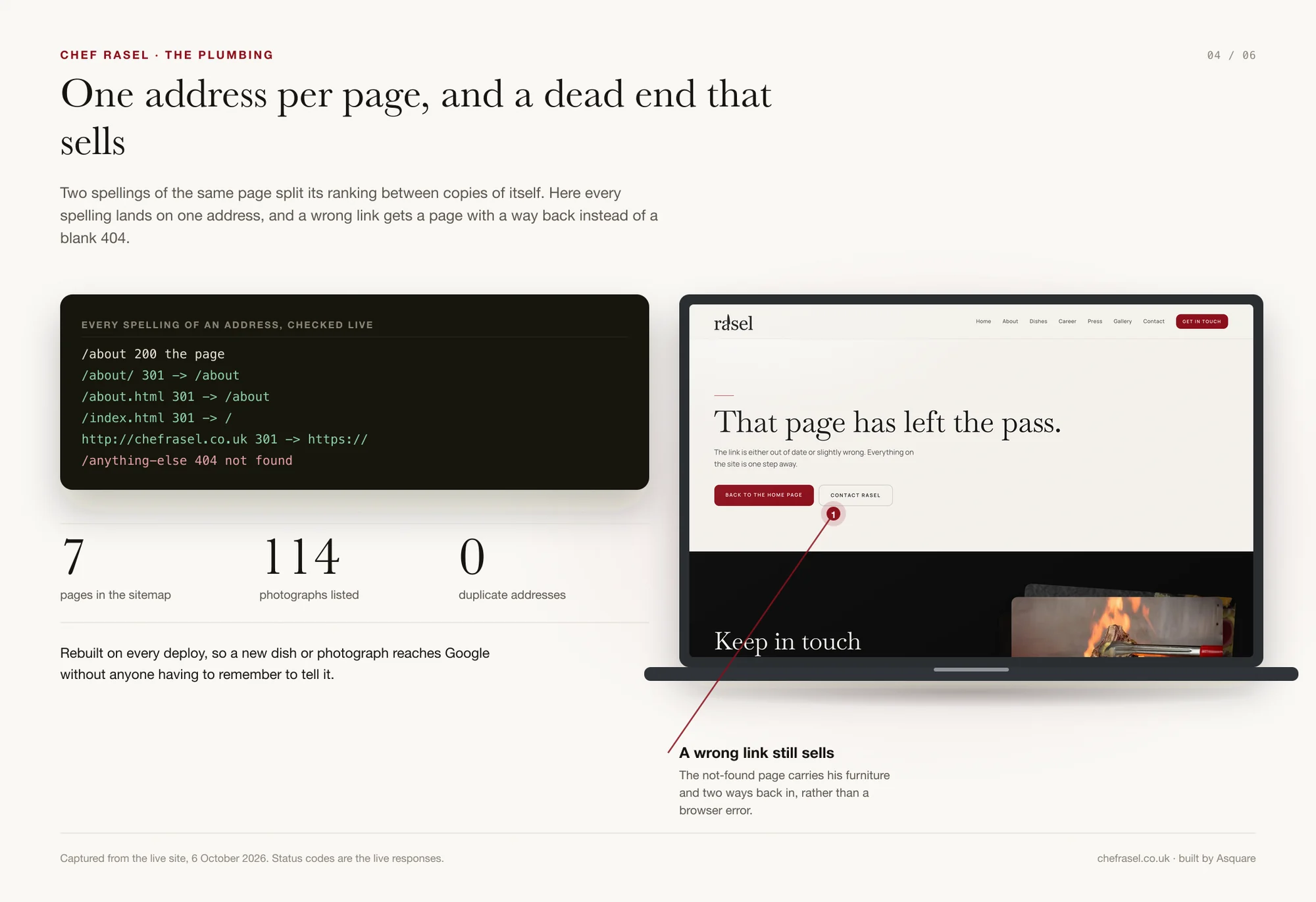
Eight questions answered in a sentence each, in the format search engines read as well as in the visible copy. Seven addresses in the sitemap, no duplicates, and a wrong link that still sells rather than dead-ending.
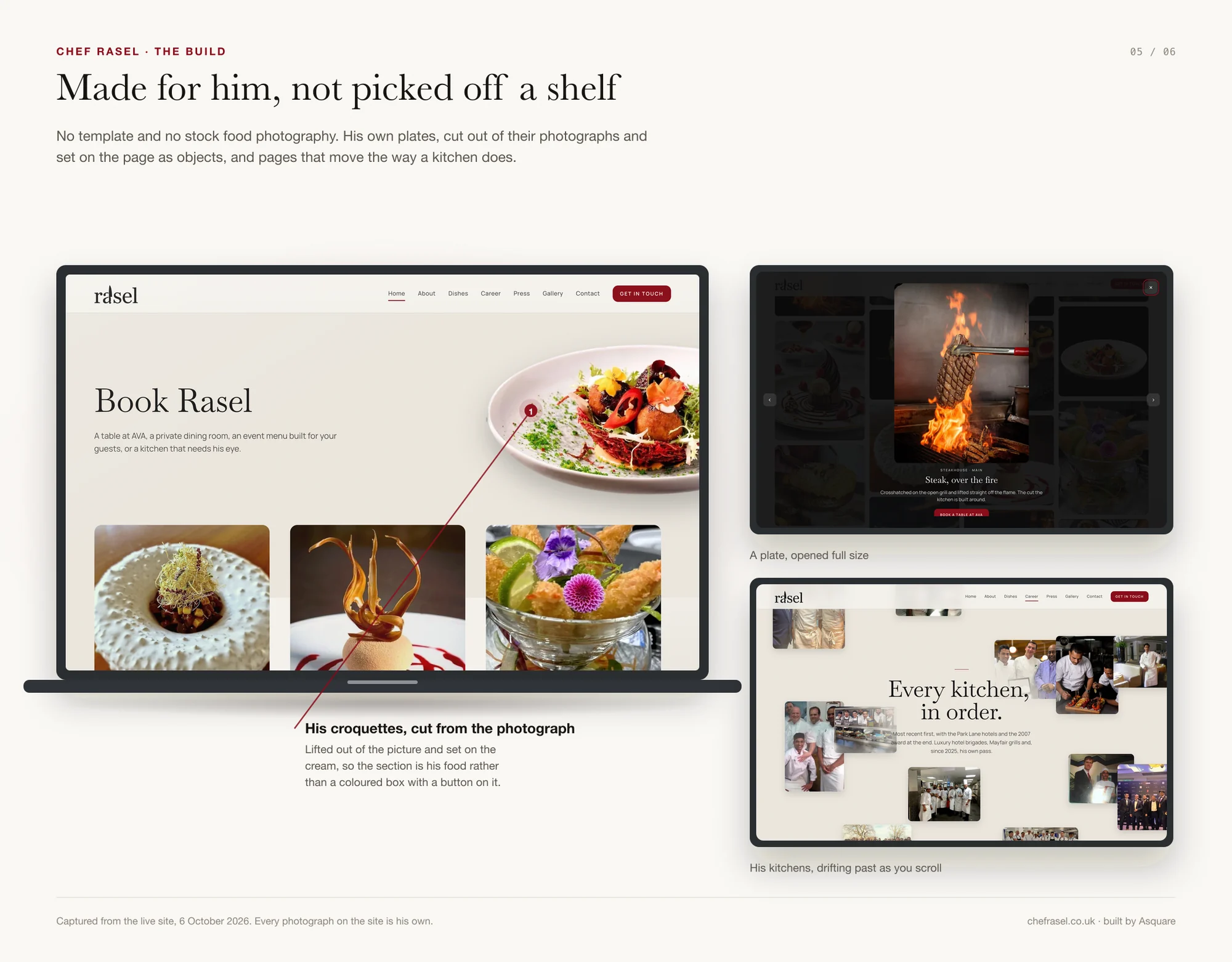
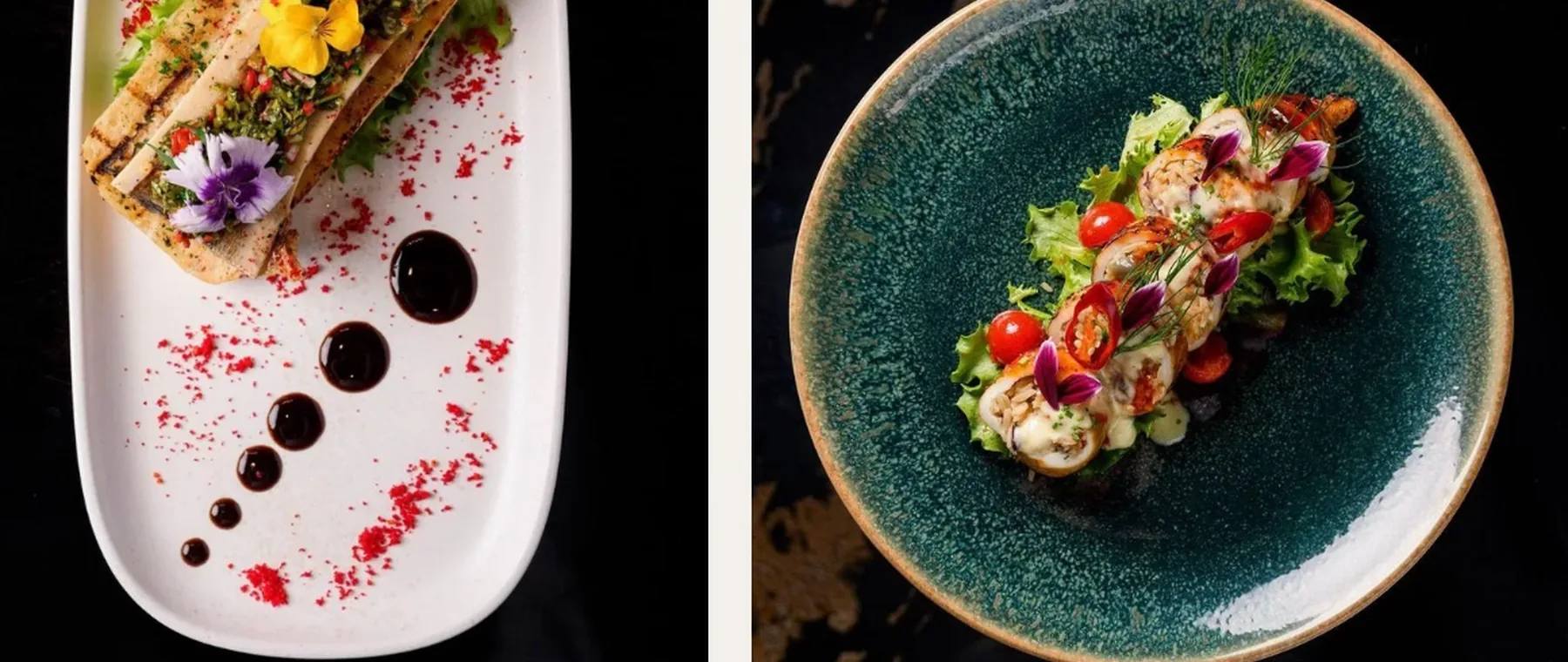
No template and not one stock food image. Every dish on the site is something he cooked, lifted out of the picture and set on the page as an object.
It is slower to build and it is the whole argument. A chef who ships a library photograph of somebody else's steak has told you what to expect.
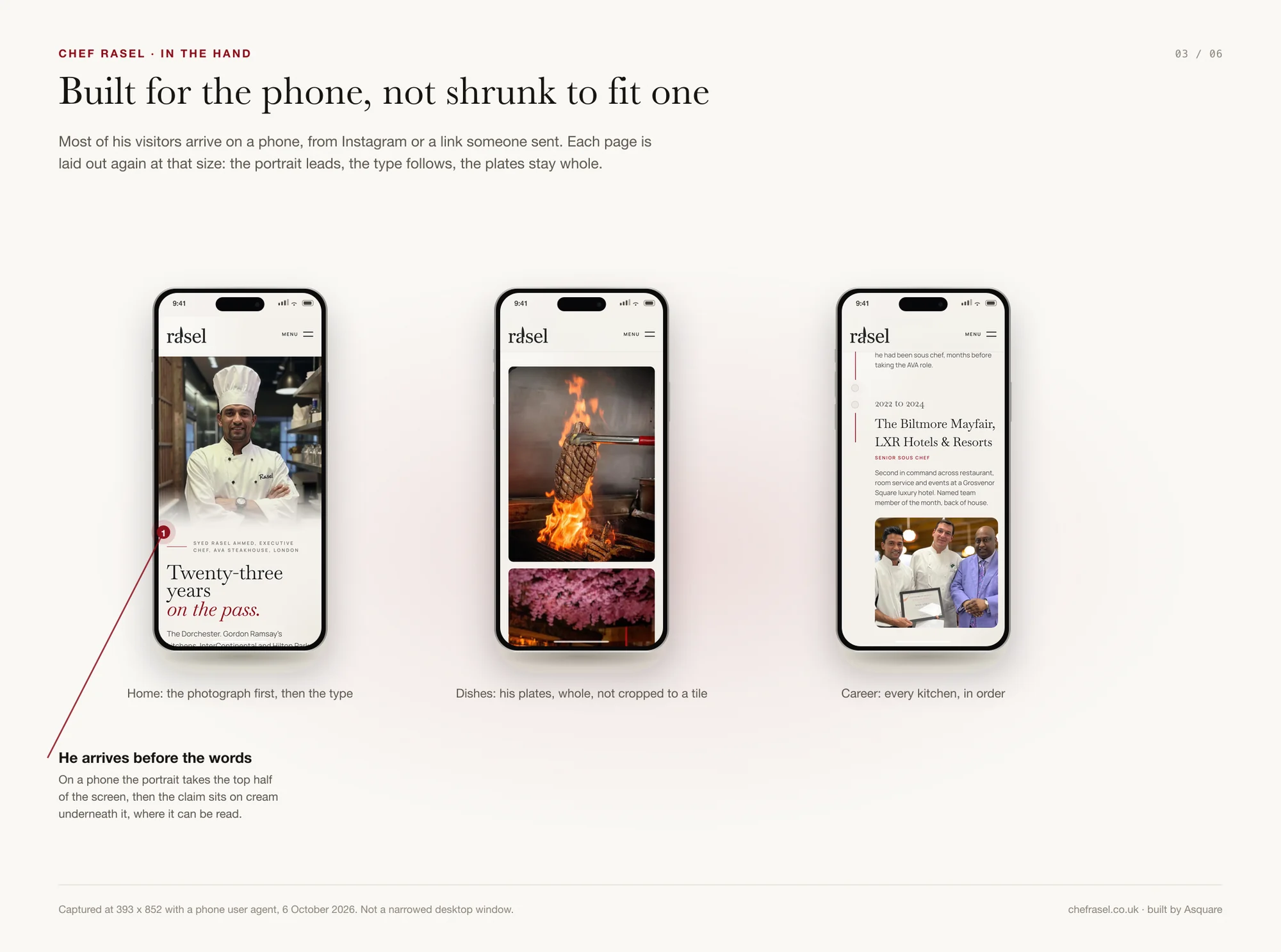
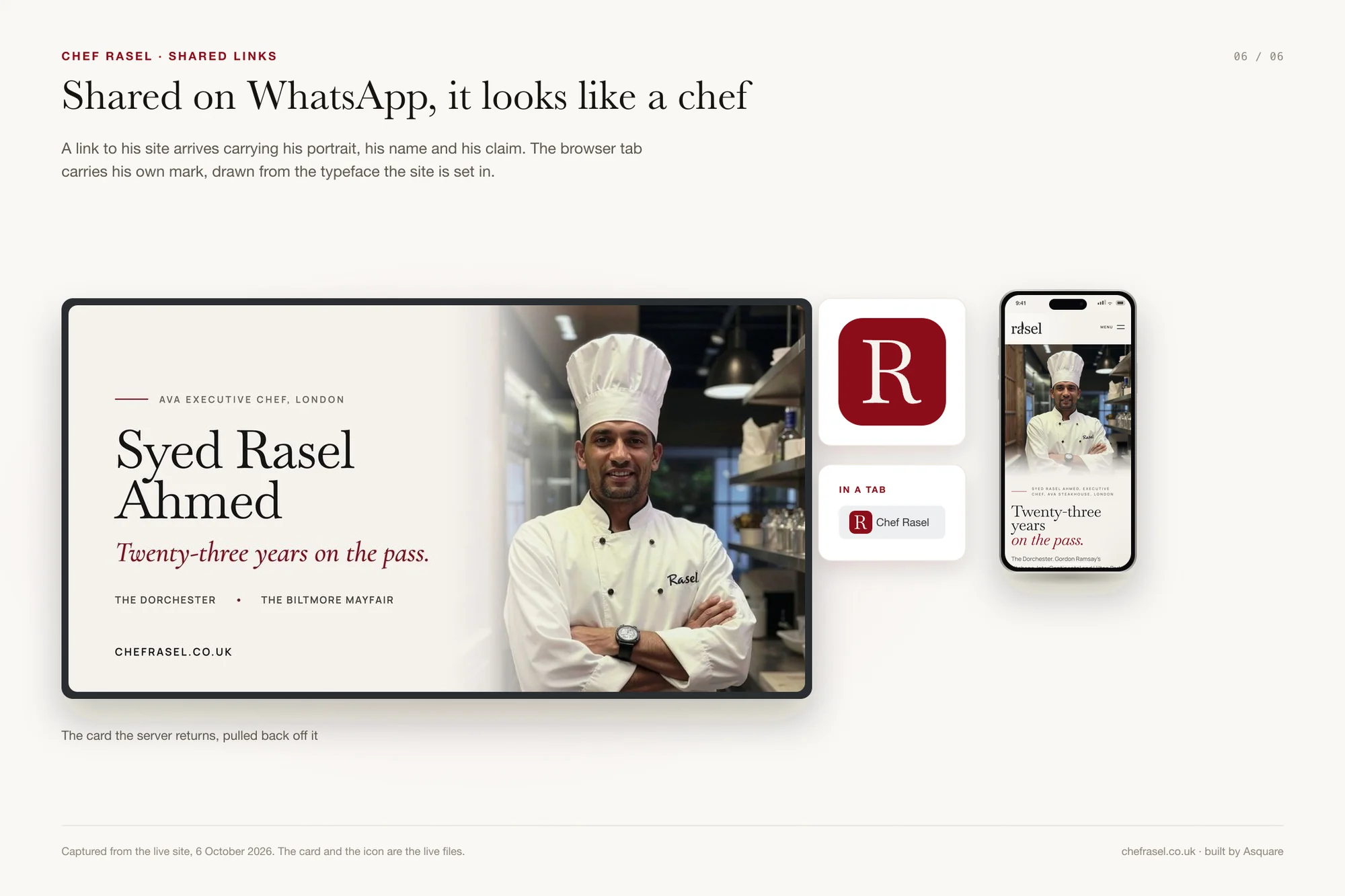
Personal sites fail in one of two directions. Either they turn into a CV in a typeface, which nobody reads, or they turn into a showreel with motion on every element, which reads as insecure. Both undersell somebody who has spent two decades in rooms where the standard is set by the detail.
So the page does very little, slowly. The headline is a single statement about time on the pass, the portrait sits beside it, and everything below is the work in order. There is no counter animating up and no claim the kitchens do not already support. When the credentials are genuinely good, the job of the design is to stay out of the way of them.
Because the work is spread across other people's brands. Twenty-three years of kitchens leaves a trail of restaurant names, none of which belongs to the chef, and a social feed that buries anything older than a fortnight. A personal site is the one place where the whole career sits in order and stays searchable under the chef's own name.
A career in order with dates and roles, the dishes as photographs rather than descriptions, any press and awards, and one obvious way to get in touch. The dishes do most of the convincing, so they need room and proper photography rather than a thumbnail grid.
Its own. The point of a personal brand is that it survives a change of job. A page inside a restaurant's website belongs to the restaurant and disappears with the role, taking the search history and any links with it.
Chefs, consultants, founders. Twenty years of it under other people's names, and a feed that forgets everything older than a fortnight. We build the one address that holds the whole record, reads properly to a machine, and stays yours when the job changes.
Book a free strategy call →