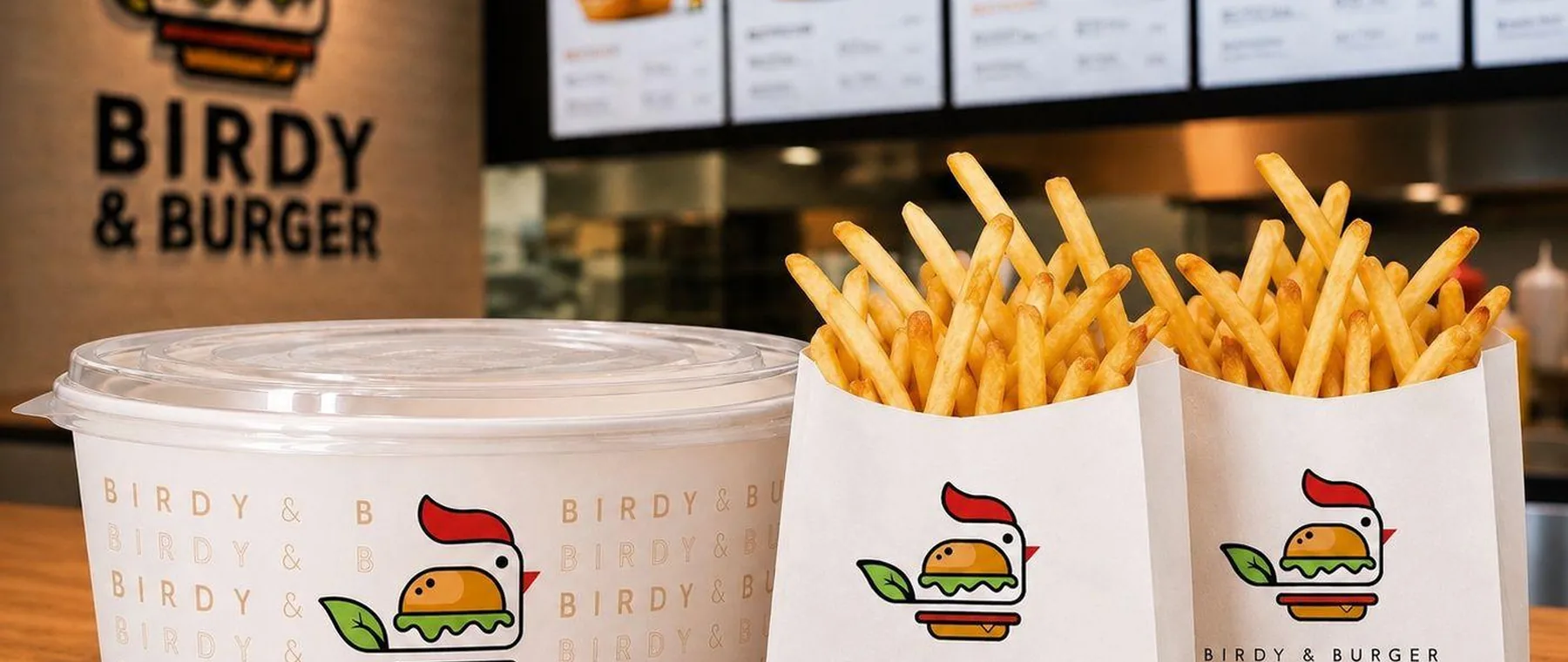
A smash burger and crispy chicken kitchen on Edgefield Ave in Upney, taking its own orders and its own payments rather than renting the customer from an app.
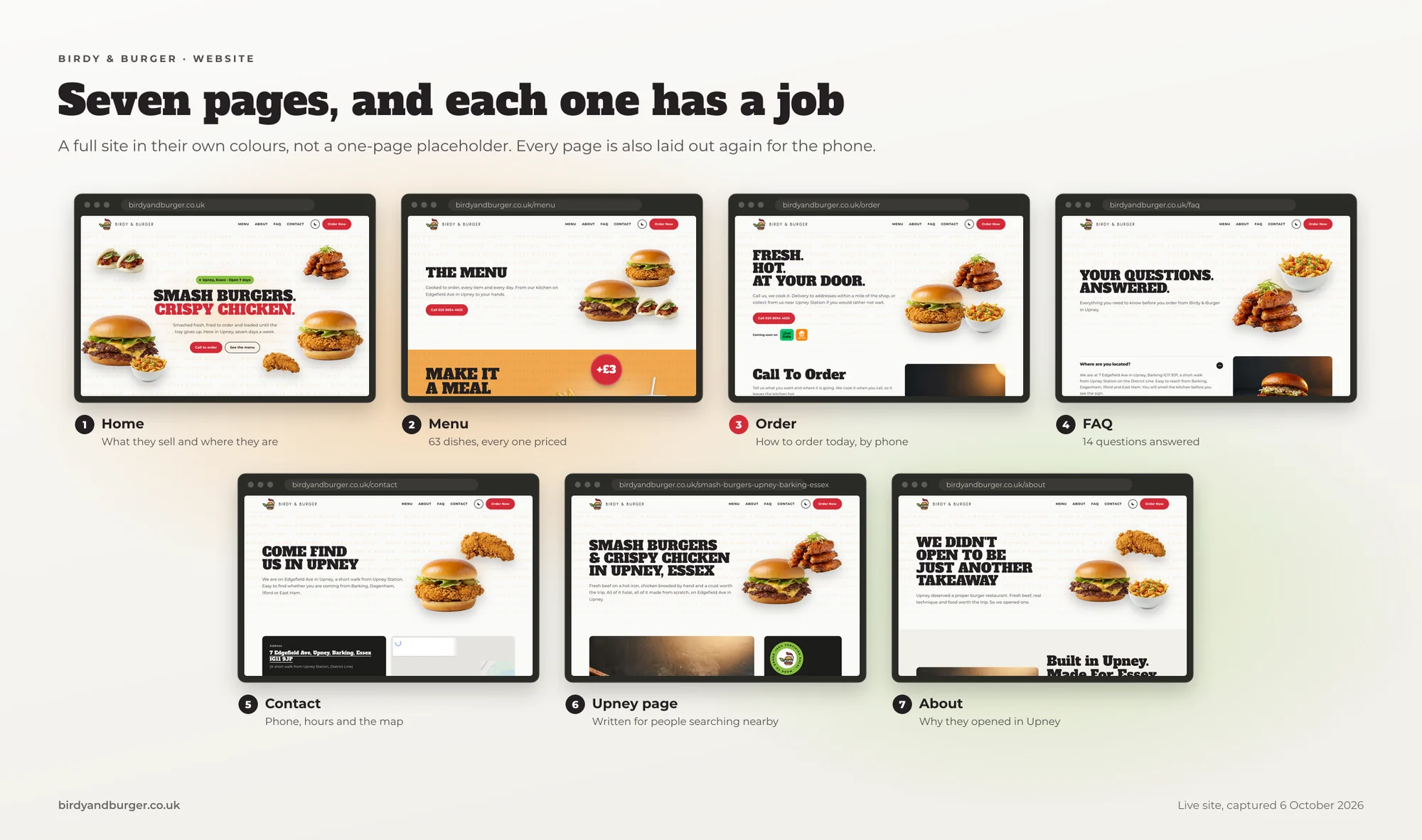
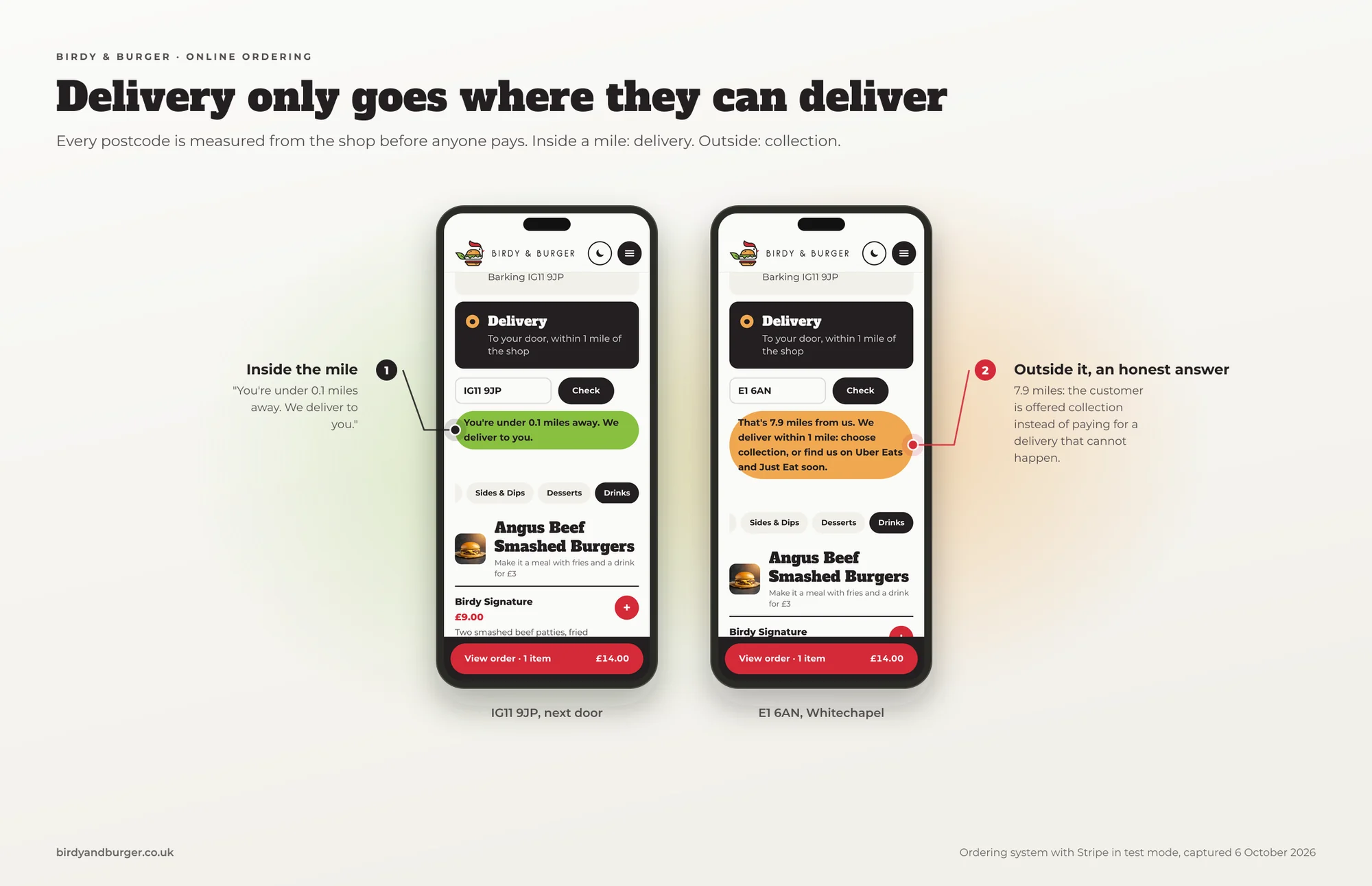
Asquare AI built the website for Birdy & Burger, an independent smash burger and crispy chicken kitchen in Upney, Essex. Seven pages in the shop's own colours, the full menu priced as real text, and ordering and card payment taken on the site itself rather than handed to an app that takes a cut. The delivery radius is checked against the shop before anyone pays, and ordering closes itself when the counter tablet goes quiet.
Smash burgers arrived in London properly a few years ago. Fresh beef on a hot flat-top, pressed hard for a caramelised crust, sauces made in the kitchen rather than squeezed out of a catering tub. In Barking, Dagenham, Ilford and East Ham the halal options never quite caught up, so people either went into town for one or settled for something near enough.
Birdy & Burger took the site on Edgefield Ave to fix that locally. The food was ready before the website was, which is the normal and difficult way round: a new independent has no reviews yet, no listing history and no reason for Google to trust it, while every delivery aggregator in the country already outranks it for the search its own customers are typing.
Not a one-page placeholder in a template's colours. A full site in Birdy & Burger's own, and every page laid out again for the phone, because that is where a takeaway order starts.
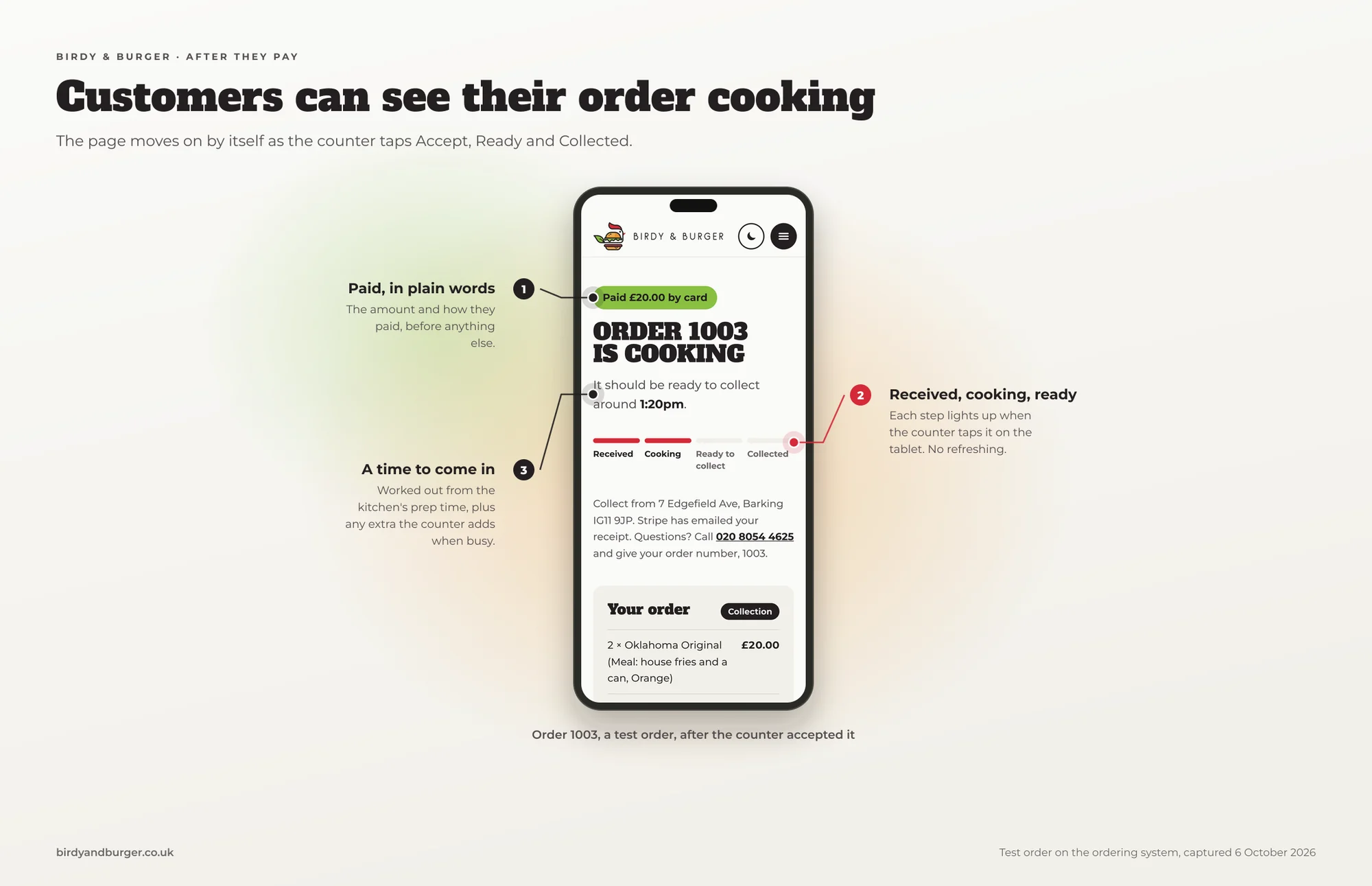
An ordering system is easy to demo and hard to live with. The failure everybody has had is the order that arrives while the tablet is face down on a shelf, and the customer who has paid for food nobody has seen.
So ordering closes itself a couple of minutes after the counter tablet goes quiet, and the page says so plainly with the phone number underneath. A shop that is shut online when it is shut in real life keeps its reviews.
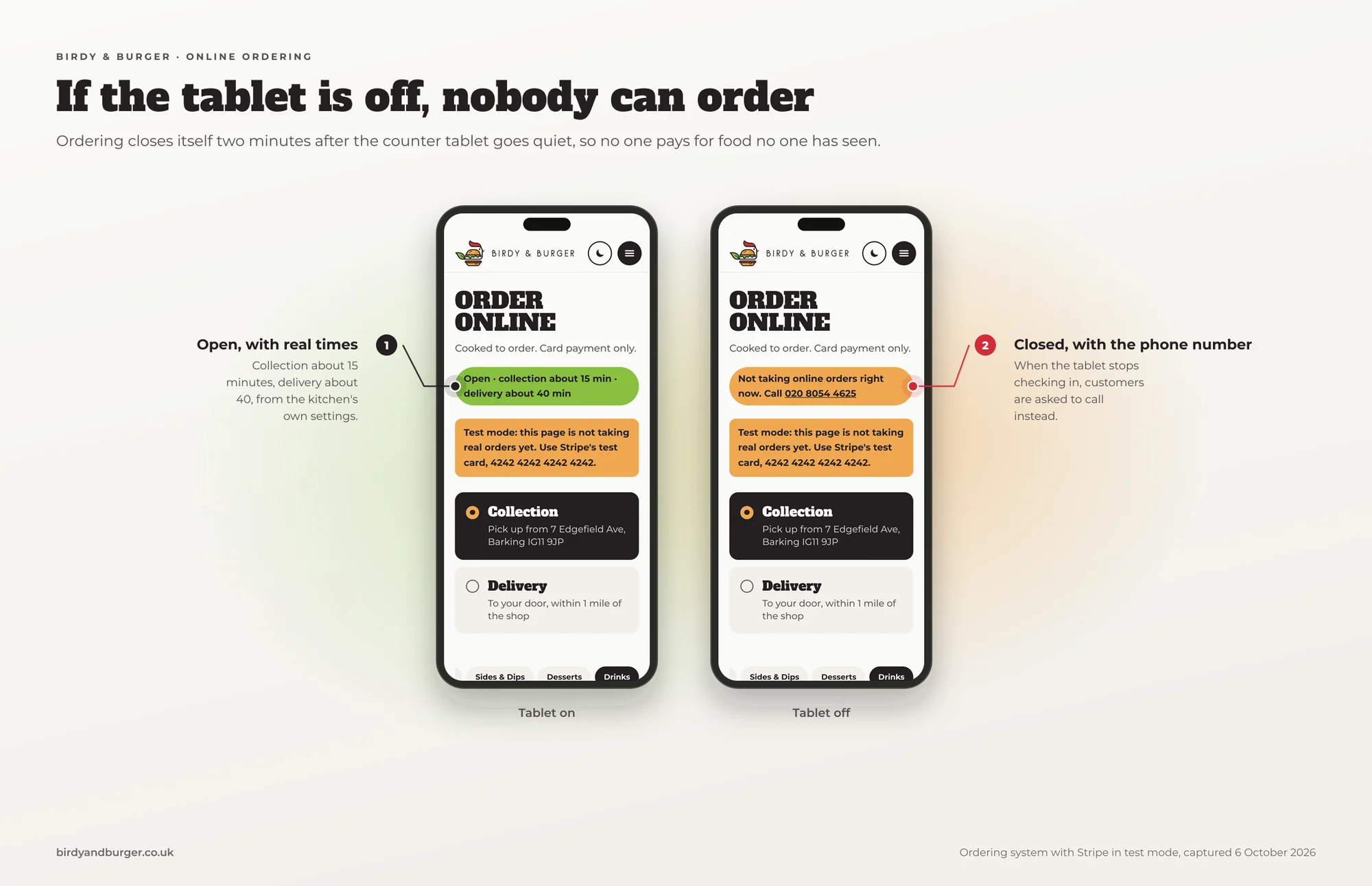
Two minutes after the counter tablet stops answering, the order button goes and the phone number takes its place. Nobody pays for food that nobody has seen.
It is the least glamorous thing on this list and the one that protects the reviews, because a refunded order still costs you the customer.
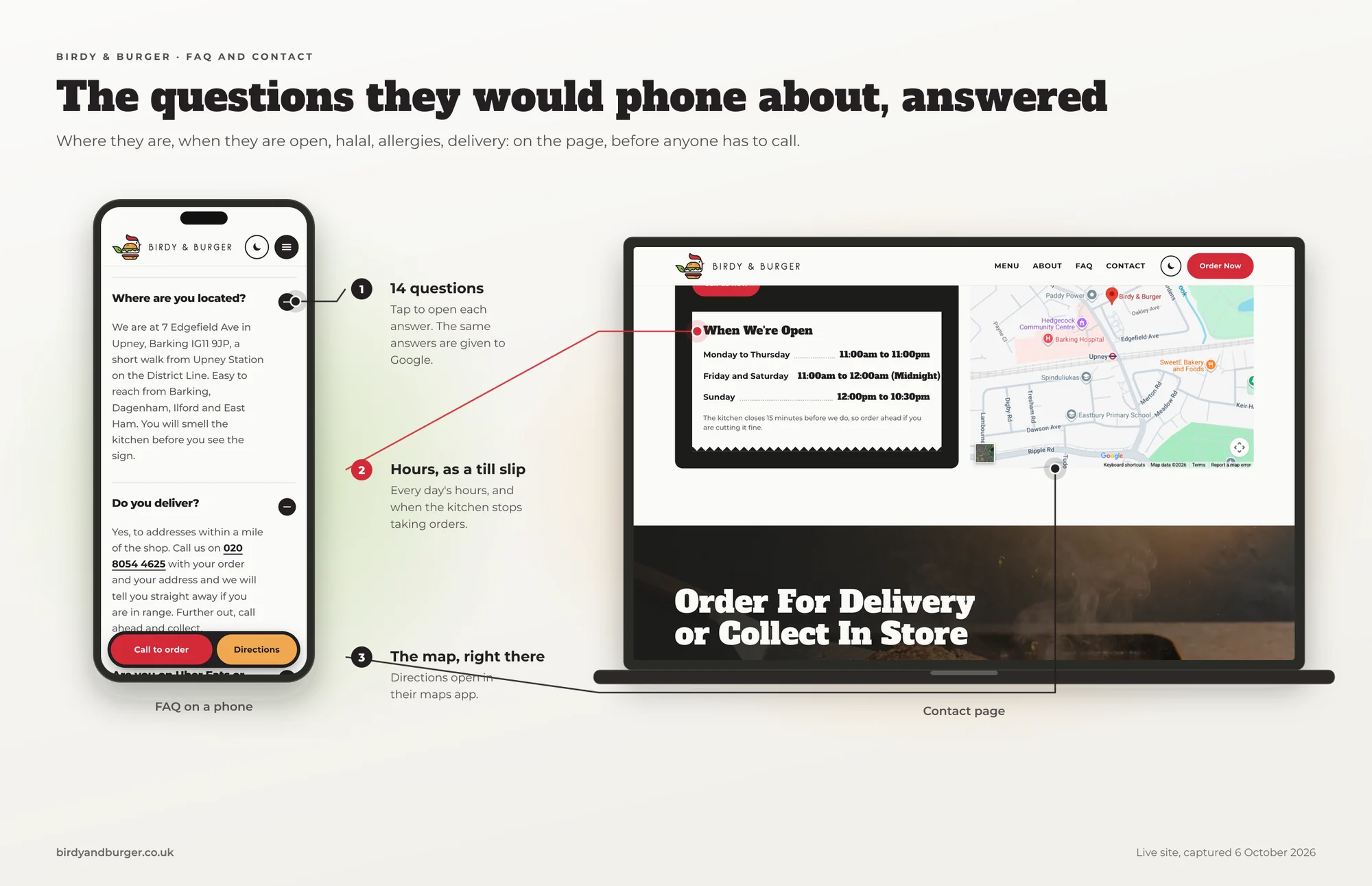
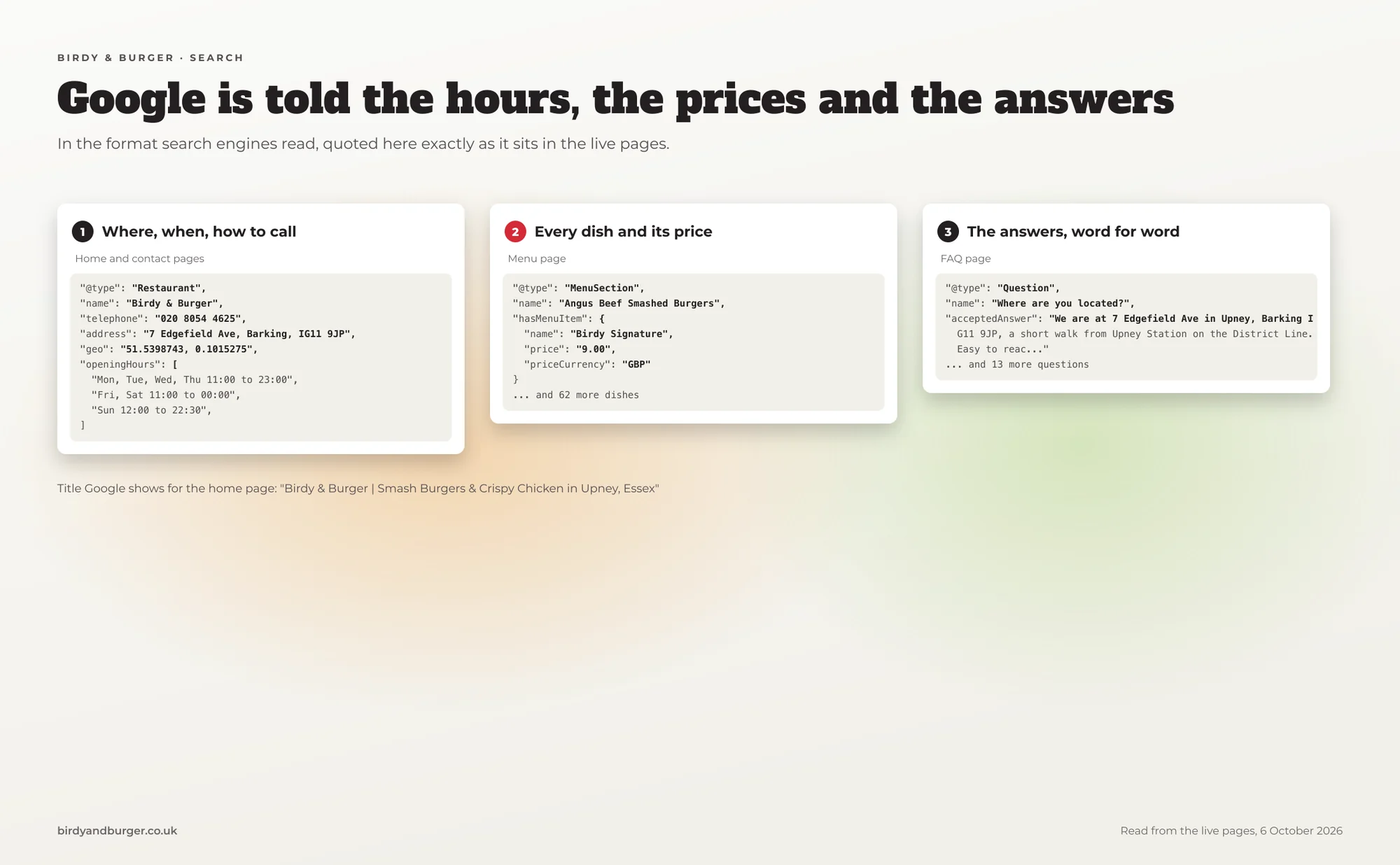
Independent food is sold on the feeling that somebody is actually back there cooking. That is hard to fake and very easy to lose: a stock photograph of a generic burger and a line about passion for quality, and the page reads like every other takeaway in the borough.
So the copy is specific about the method rather than enthusiastic in general. Beef that starts as fresh mince and gets pressed onto the iron for the crust. Chicken marinated and coated by hand, fried when the order comes in. Fries cut thick and dropped fresh instead of sitting under a lamp. A reader can tell the difference between a kitchen describing itself and a copywriter describing a kitchen, and so, increasingly, can a search engine.
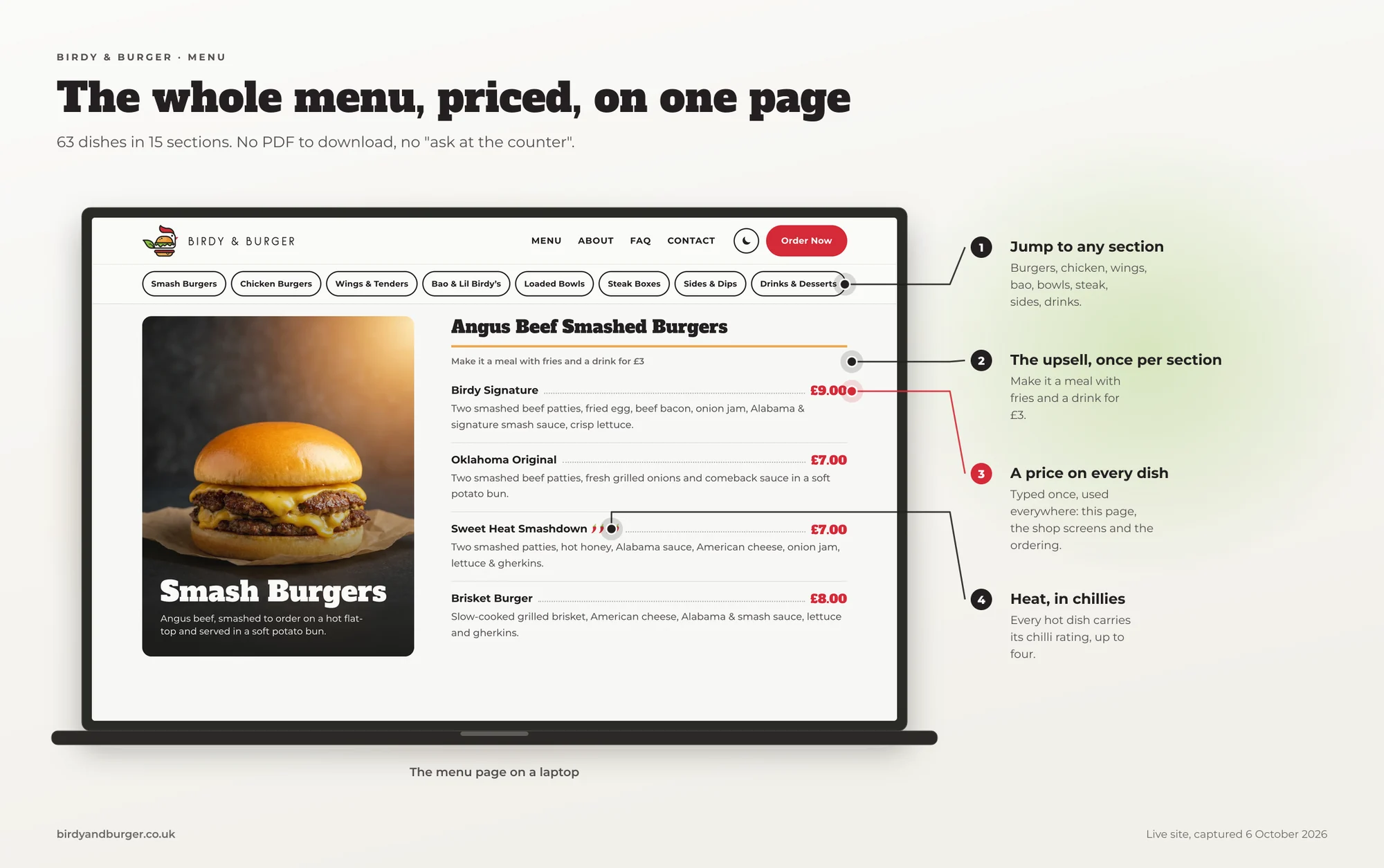
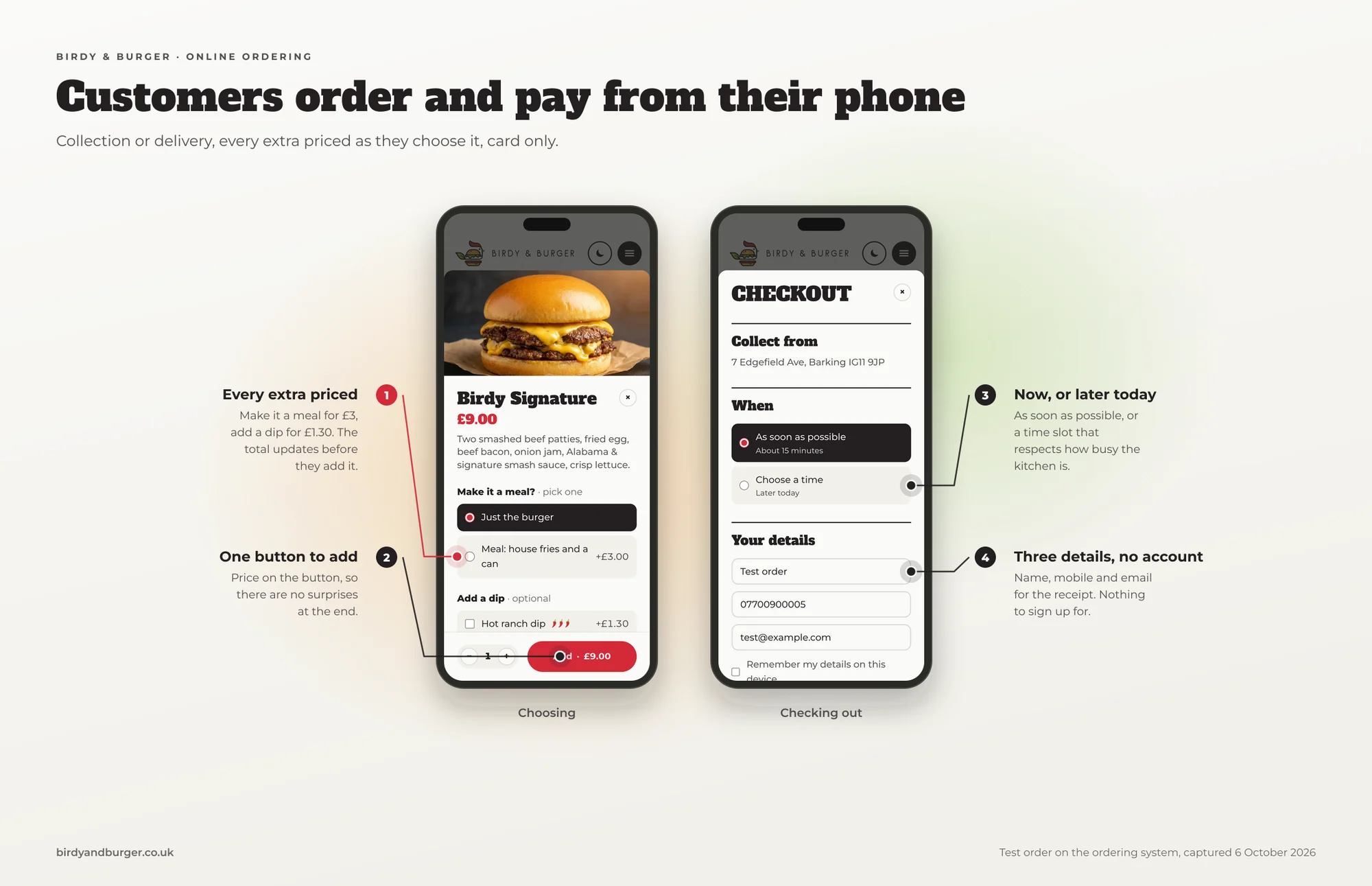
On its own site if you can. The menu belongs on your own pages as real text with real prices, because that is what search engines read and what somebody comparing three places at nine at night wants to see without installing anything. Birdy & Burger takes the order and the card payment itself, so no commission leaves the shop and the customer stays theirs. A site that only links out teaches people to open the app first, and after that the app owns the relationship.
If it is a deciding factor for the people you feed, yes, and plainly. For Birdy & Burger it is the reason a lot of the neighbourhood can order without ringing to check, so the site states that the whole menu is certified rather than leaving it to be inferred from a badge in the footer.
Fewer than most agencies sell, but each one needs a job. Birdy & Burger runs on seven: home, the menu, how to order, the questions, how to find the place, a page for the neighbourhood, and the story. What matters is that each is written properly and names the places you serve, not how many there are.
A cut of every ticket, and the customer stays theirs. If your menu lives in a PDF and your regulars reach you through somebody else's listing, there is a version of this where the order, the payment and the customer are all yours. Tell us the town and we will pull the searches you are missing before we quote a thing.
Book a free strategy call →